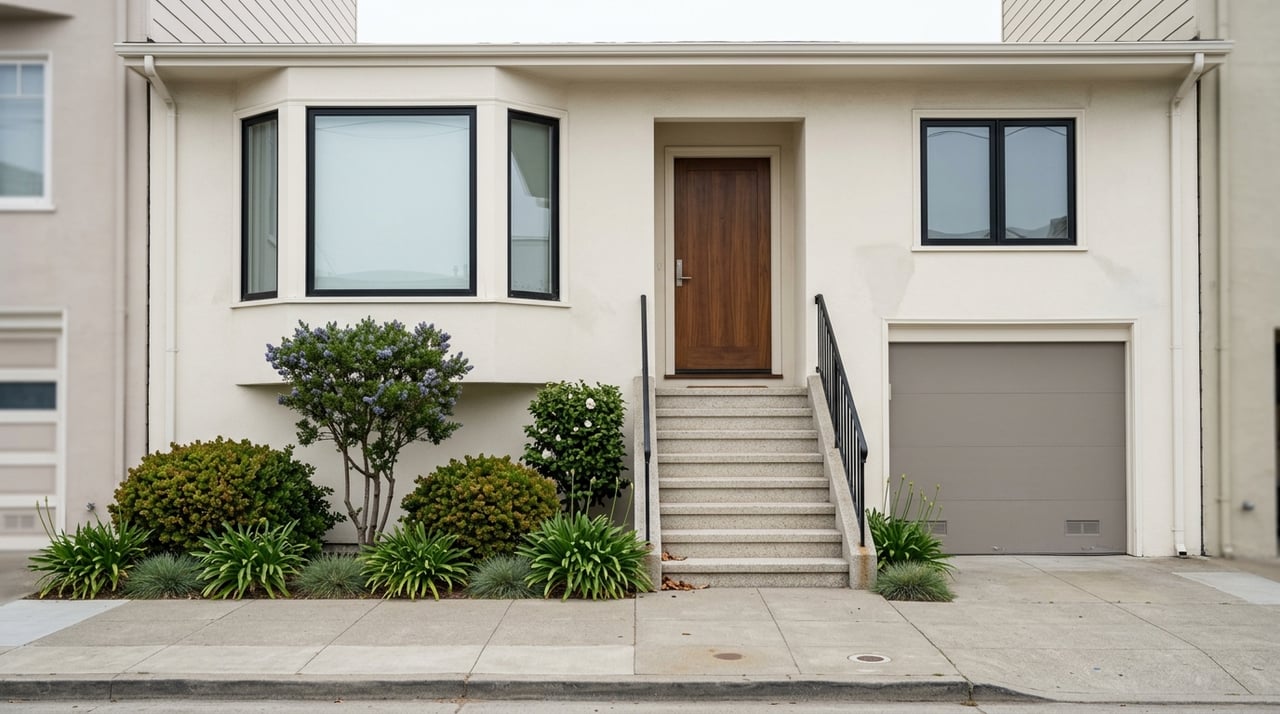
If you are looking for a San Francisco neighborhood that feels established, connected, and a bit more attainable than many central-city options, Crocker Amazon deserves a closer look. You may be weighing budget, commute patterns, outdoor space, and how competitive the market really is before making a move. This guide breaks down what to know about Crocker Amazon living and housing, from home styles and pricing to transit and parks, so you can make a more confident decision. Let’s dive in.
Where Crocker Amazon Sits
Crocker Amazon is on the southern edge of San Francisco, near Daly City, with McLaren Park to the east and major roadway access nearby. San Francisco Planning places it within the Excelsior & Outer Mission strategy area, bounded generally by I-280 on the north and west, McLaren Park on the east, and Daly City on the south.
That location gives the neighborhood a distinct feel within the city. Instead of reading as a dense rail-core district, Crocker Amazon comes across as a more corridor-connected residential area with practical access to surrounding parts of San Francisco and the Peninsula.
It is also worth knowing that public data may define the neighborhood a little differently depending on the source. DataSF notes that San Francisco analysis neighborhoods are grouped from census tracts rather than fixed legal boundaries, so market snapshots and planning references may not line up perfectly.
What Living Here Feels Like
Crocker Amazon is best understood as an established residential neighborhood with a long-standing housing base and strong family-household presence. In San Francisco Planning’s 2006 to 2010 profile, the neighborhood had 14,420 residents, 3,950 households, and 78% family households.
That older profile helps explain why the area is often described as residential and community-oriented. While the numbers are historical, they still support the broader picture of Crocker Amazon as a neighborhood shaped more by existing homes and daily livability than by constant waves of large new development.
For many buyers, that translates into a neighborhood that feels rooted. You are more likely to find an area defined by its existing streetscape, established blocks, and nearby recreation than by brand-new towers or major master-planned construction.
Housing Stock in Crocker Amazon
If home character matters to you, Crocker Amazon stands out as an older, mostly built-out part of the city. San Francisco Planning reported a median structure year built of 1946, along with 4,160 total housing units.
That matters because it helps set expectations. Much of the housing story here is about existing homes rather than newly built inventory, which can appeal to buyers who want a neighborhood with more historical continuity and a less constantly changing physical landscape.
Ownership has also been a meaningful part of the local housing mix. In that same planning profile, 66% of households were owner-occupied, which supports the idea of Crocker Amazon as a place with a substantial base of long-term homeowners.
Crocker Amazon Home Prices
Crocker Amazon is not inexpensive, but it does sit in a lower price band than many better-known San Francisco neighborhoods. That can make it worth considering if you want to stay in the city while seeking a comparatively lower entry point.
Recent market data shows strong pricing even with that relative value. Redfin reported a median sale price of $1,262,575 in May 2026, while Realtor.com showed a median sold price of $1,275,531 and a median listing price of $998,000 during the same month.
Zillow’s home value index for Crocker Amazon was $1,106,094 as of May 31, 2026, up 4.6% year over year. These figures are not identical because each source measures the market differently, but together they point to a neighborhood with steady value and active buyer demand.
How It Compares to San Francisco
Context matters when you are comparing neighborhoods. Redfin’s broader San Francisco market data put the citywide median sale price at $1.7 million over the same three-month period.
That means Crocker Amazon still comes in below the city median. It also sits below neighborhoods such as Glen Park at about $1.94 million, Russian Hill at about $1.92 million, Pacific Heights at about $2.43 million, and Bernal Heights at about $1.7 million.
For buyers, that does not mean cheap. It means more accessible by San Francisco standards, which is an important distinction if you are trying to balance city location, budget, and homeownership goals.
Market Competition to Expect
Even though Crocker Amazon can offer a lower price point than some other San Francisco neighborhoods, the market is still very competitive. Redfin described the neighborhood as highly competitive in May 2026.
The numbers back that up. Redfin reported 12 median days on market, 18 homes sold in May, and 82.2% of sales closing above list price, with a sale-to-list ratio of 123.1%.
Realtor.com reported 23 median days on market and 15 homes for sale in May 2026, plus just 3 homes for rent. For you as a buyer, this suggests that preparation matters. If the right home comes up, timing, strategy, and strong guidance can make a real difference.
Parks and Outdoor Access
One of Crocker Amazon’s clearest lifestyle advantages is access to recreation and open space. Crocker Amazon Playground is a major neighborhood amenity, and San Francisco Recreation and Parks describes it as a substantial sports complex at 799 Moscow Street and Geneva.
The site includes five lighted soccer fields, baseball and softball fields, tennis courts, basketball courts, bocce, a skatepark, a clubhouse, a community garden, and dog-friendly areas. There is also an active improvement project planned for a redesigned children’s play area, nature exploration area, and upgrades to irrigation, landscaping, fencing, and picnic seating.
That kind of recreational infrastructure can shape day-to-day life in a meaningful way. Whether you value outdoor time, sports access, or simply having more room to spread out, this is a notable neighborhood strength.
Nearby McLaren Park Access
Crocker Amazon also benefits from its proximity to the broader McLaren park system. San Francisco Recreation and Parks says McLaren Natural Area and John McLaren Park together offer more than 11 miles of trails and make up the city’s second-largest park.
The recreation guide also points to nearby destinations such as Louis Sutter Playground and McNab Lake. If you want a San Francisco neighborhood where park access is part of the everyday value, Crocker Amazon has a strong case.
Transit and Getting Around
Transit in Crocker Amazon is more bus-oriented than rail-centered. That is one of the most important practical takeaways if you are comparing this area to neighborhoods closer to San Francisco’s rail hubs.
SFMTA lists a wide range of routes serving the neighborhood, including the 8 Bayshore, 8BX Bayshore B Express, 9 San Bruno, 14 Mission, 14R Mission Rapid, 14X Mission Express, 28R 19th Avenue Rapid, 43 Masonic, 54 Felton, 58 Lake Merced, 91 Owl, and the 88 BART Shuttle. However, SFMTA currently shows the 88 BART Shuttle as suspended, so it should not be counted as active service right now.
For many residents, the value here is not rail-first convenience. It is a practical bus network combined with roadway access and a location close to Daly City.
Mission and Geneva Corridors
Mission Street and Geneva Avenue are especially important to how the neighborhood functions. SFMTA identifies this corridor as part of the Vision Zero High Injury Network and notes that it includes more than 300 storefronts.
The city has also focused on safety and transit improvements there, including bulb-outs, pedestrian crossings, transit bulbs, and loading management. The 14 Mission and 14R Mission Rapid operate on this corridor, which SFMTA says serves San Francisco’s highest-ridership bus corridor, carrying nearly 46,000 passengers daily from the Ferry Building through the Mission and Excelsior districts to Daly City.
That makes the corridor a practical anchor for daily movement. If you rely on frequent bus service, this is a meaningful part of Crocker Amazon’s appeal.
Connection to Daly City
The 54 Felton is another useful route for local mobility. SFMTA notes that it serves Crocker Amazon and includes direct references to Daly City BART along with stops at Geneva Avenue and Mission Street.
Taken together, the neighborhood’s bus routes, access to Mission and Geneva, and location near I-280 create a clear transportation profile. Crocker Amazon works well for people who value southern-city positioning and practical connections more than a rail-centered lifestyle.
Who Crocker Amazon May Suit Best
Crocker Amazon can make sense for buyers who want to stay in San Francisco but need to think carefully about value relative to the rest of the city. It may also appeal to people who prioritize established housing, owner-heavy blocks, and access to recreation.
If you are relocating, this neighborhood can be especially worth a look if your search is shaped by commute flexibility, a desire for more residential surroundings, or the need to compare trade-offs across city neighborhoods. Because inventory can be limited and competition can be strong, it helps to go in with a clear plan.
For sellers, the local data suggests there is real buyer demand, especially when homes are priced and presented well. In a market where many properties close above list price, preparation and positioning still matter.
Final Takeaway
Crocker Amazon offers a combination that can be hard to find in San Francisco: an established residential setting, meaningful park access, solid transit corridors, and home prices that generally sit below the city’s median. At the same time, it remains a competitive market where buyers should be ready to act and sellers should approach pricing and presentation strategically.
If you are considering a move in or around San Francisco and want thoughtful guidance on neighborhood fit, timing, and next steps, Native Real Estate can help you navigate the process with clarity and care.
FAQs
What is Crocker Amazon like for homebuyers in San Francisco?
- Crocker Amazon is an established residential neighborhood with older housing stock, substantial owner occupancy, strong park access, and a competitive market that still tends to price below San Francisco’s overall median.
How expensive are homes in Crocker Amazon?
- In May 2026, Redfin reported a median sale price of $1,262,575, Realtor.com reported a median sold price of $1,275,531, and Zillow’s home value index was $1,106,094.
Is Crocker Amazon more affordable than other San Francisco neighborhoods?
- Relative to many San Francisco neighborhoods, yes. Recent Redfin data placed Crocker Amazon below the citywide median sale price of $1.7 million and below areas such as Glen Park, Russian Hill, Pacific Heights, and Bernal Heights.
What kind of housing stock is in Crocker Amazon?
- San Francisco Planning’s neighborhood profile reported a median structure year built of 1946, which supports the view of Crocker Amazon as an older, mostly built-out housing area.
Does Crocker Amazon have good parks and recreation?
- Yes. Crocker Amazon Playground offers fields, courts, a skatepark, a clubhouse, a community garden, and dog-friendly areas, and the nearby McLaren park system includes more than 11 miles of trails.
How do you get around from Crocker Amazon?
- Transit is primarily bus-based, with SFMTA routes including the 14 Mission, 14R Mission Rapid, 54 Felton, and several others, plus convenient access to Mission Street, Geneva Avenue, Daly City, and I-280.
Is Crocker Amazon a competitive real estate market?
- Yes. Redfin described the neighborhood as highly competitive in May 2026, with 12 median days on market and 82.2% of homes selling above list price.